
Space

new discoveries and informative knowledge about space and science

Crewed capsule orbiting the Moon with Mars and a lunar base beyond

Future of Space Exploration: 11 Important Points to Know (2026)

Quick answer: The future of space exploration will be shaped by reusable rockets and private companies, crewed missions back to the Moon and later to Mars, robotic probes across the solar system, asteroid mining, space tourism and powerful telescopes searching for life on exoplanets. In April 2026, NASA’s Artemis II flew four astronauts around the

Future of Space Exploration: 11 Important Points to Know (2026) Read More »
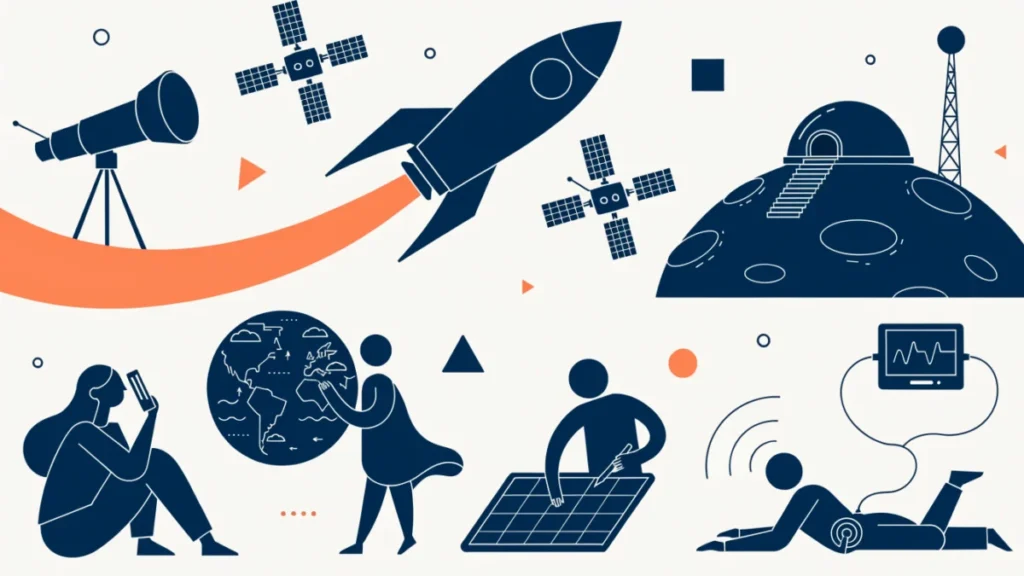
Rocket and satellites above people using phones and weather maps, illustrating benefits of space exploration

Top 21 Benefits of Space Exploration to Mankind

Quick answer: Space exploration benefits life on Earth as well as science. It has produced satellite communication, GPS and weather and climate monitoring, advances in materials, medicine, robotics and miniaturised electronics, early warning of solar storms and asteroid risks, new industries such as commercial launch and space tourism, international cooperation and inspiration for science education.

Top 21 Benefits of Space Exploration to Mankind Read More »

Spacecraft in orbit surrounded by debris and a solar flare

10 Major Dangers of Commercial Space Travel

Quick answer: The main dangers of commercial space travel are vehicle failures during launch or re-entry, collisions with space debris, radiation exposure (including from solar storms), the effects of microgravity on bones, muscles and eyes, space sickness, life-support failures, psychological stress, environmental damage from rocket emissions, and unclear laws on liability and jurisdiction. Short suborbital

10 Major Dangers of Commercial Space Travel Read More »

Astronomers viewing nebula and galaxy images in a control room

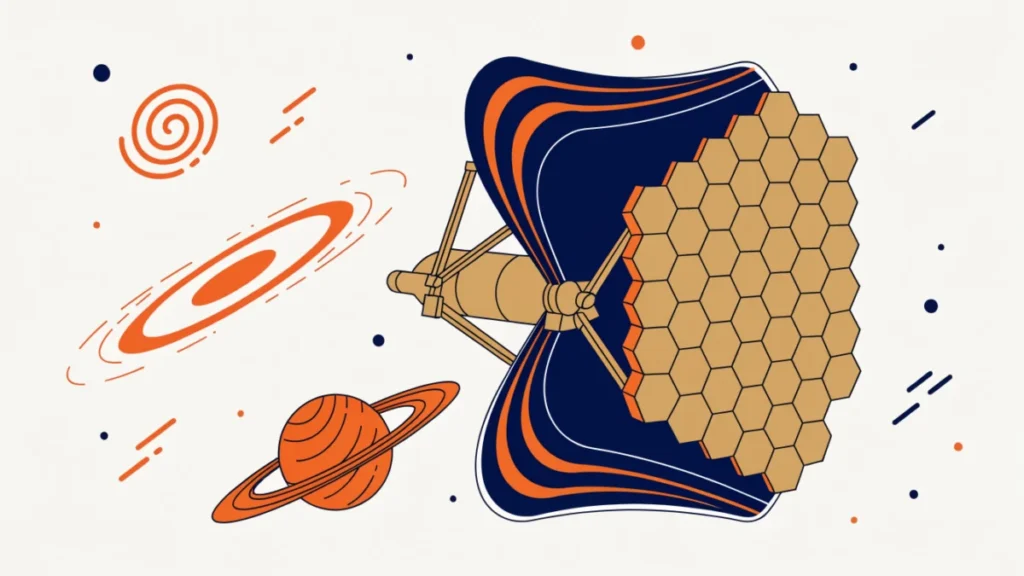
18 Reasons the James Webb Space Telescope (JWST) Is Important

Quick answer: The James Webb Space Telescope matters because it is the most powerful space telescope ever launched. Its 6.5-metre gold-coated mirror and infrared instruments let it see the first galaxies formed a few hundred million years after the Big Bang, look through dust into stellar nurseries, analyse the atmospheres of exoplanets, study black holes,

18 Reasons the James Webb Space Telescope (JWST) Is Important Read More »

discoveries of the James Webb Space Telescope

25 Unbelievable Discoveries of the James Webb Space Telescope (Exploring the Cosmos)

The James Webb Space Telescope has exceeded expectations and delivered on its promise to be a trailblazing space observatory. Its discoveries have opened new frontiers of knowledge and stimulated a renewed sense of wonder about the cosmos. As the JWST continues its mission, we can only anticipate even more profound discoveries that will shape our

25 Unbelievable Discoveries of the James Webb Space Telescope (Exploring the Cosmos) Read More »

Engineers assembling a gold-mirrored space telescope

12 Reasons for Making the James Webb Space Telescope (Explained)

Quick answer: NASA, the European Space Agency and the Canadian Space Agency built the James Webb Space Telescope, at a cost of about US$10 billion, to see further and in more detail than Hubble. Working in infrared, it was designed to observe the first stars and galaxies, look through dust to watch stars and planets

12 Reasons for Making the James Webb Space Telescope (Explained) Read More »

Reusable rocket landing beside satellites and a space station

16 Benefits of Commercial Space Travel for Humanity

Quick answer: Commercial space companies have cut launch costs sharply through reusable rockets, which is opening space to more satellites, research and business. The main benefits are cheaper satellite internet and Earth observation, more scientific research in orbit, new technology that reaches everyday products, jobs and economic growth, international collaboration, space tourism and future options

16 Benefits of Commercial Space Travel for Humanity Read More »