In the self-balancing system, every ledger has its own adjustment account, is complete under double entry and produces its own trial balance. In the sectional balancing system, only the general ledger balances, using total debtors and total creditors accounts to check the subsidiary ledgers. Self-balancing locates errors more precisely but takes more work; sectional balancing is simpler and suits smaller firms.
When a business has thousands of customers and suppliers, one ledger is not enough, and finding errors becomes a nightmare. Accountants split the books into a debtors (sales) ledger, a creditors (bought) ledger and a general ledger. The question is how to check each one separately. There are two methods: the self-balancing system and the sectional balancing system.
How Each System Works
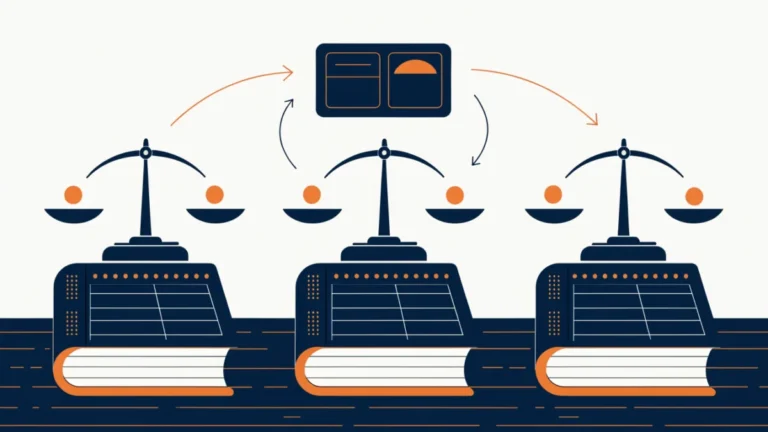
In the self-balancing system, every ledger gets its own adjustment account (for example, a General Ledger Adjustment Account in the debtors ledger and a Debtors Ledger Adjustment Account in the general ledger). Each ledger is complete under double entry and can produce its own trial balance. See self-balancing ledgers with illustrations.
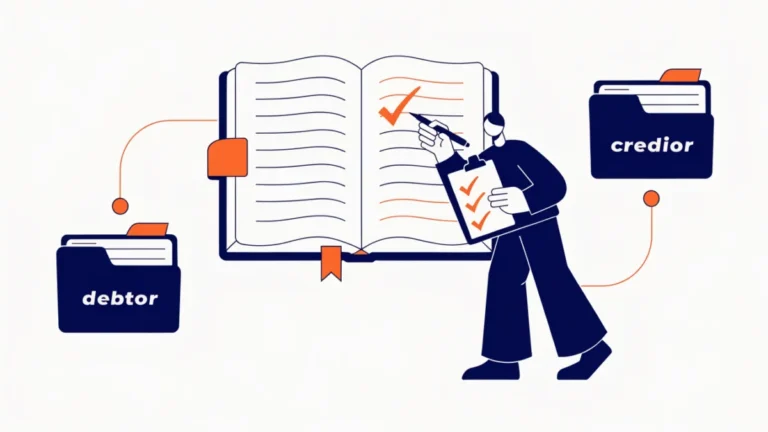
In the sectional balancing system, only the general ledger is balanced. Total Debtors and Total Creditors accounts are prepared in the general ledger, and the totals of the individual debtors and creditors balances are checked against them. The subsidiary ledgers do not balance themselves. See sectional balancing with examples.
Differences Between Self-Balancing and Sectional Balancing
| Basis | Self-balancing system | Sectional balancing system |
|---|---|---|
| Ledgers made self-balancing | All ledgers (debtors, creditors, general) | Only the general ledger |
| Accounts used | Adjustment accounts in each ledger | Total debtors and total creditors accounts in the general ledger |
| Double entry | Complete within each ledger | Total accounts act as a memorandum check; subsidiary ledgers are not self-contained |
| Trial balance | Separate trial balance for every ledger | Trial balance of the general ledger only |
| Locating errors | Errors are traced to a specific ledger | Errors in subsidiary ledgers are harder to pin down |
| Work involved | More entries, more effort | Simpler and quicker |
| Suits | Large firms with many ledgers and staff | Small and medium firms |
Which Should a Business Use?
Use self-balancing when separate clerks keep different ledgers and you need to hold each accountable. Use sectional balancing when the volume is moderate and you mainly want a quick check on debtors and creditors. Most businesses today run accounting software that keeps control accounts automatically, but the logic is the same. For the benefits of both, see advantages of sectional and self-balancing systems.