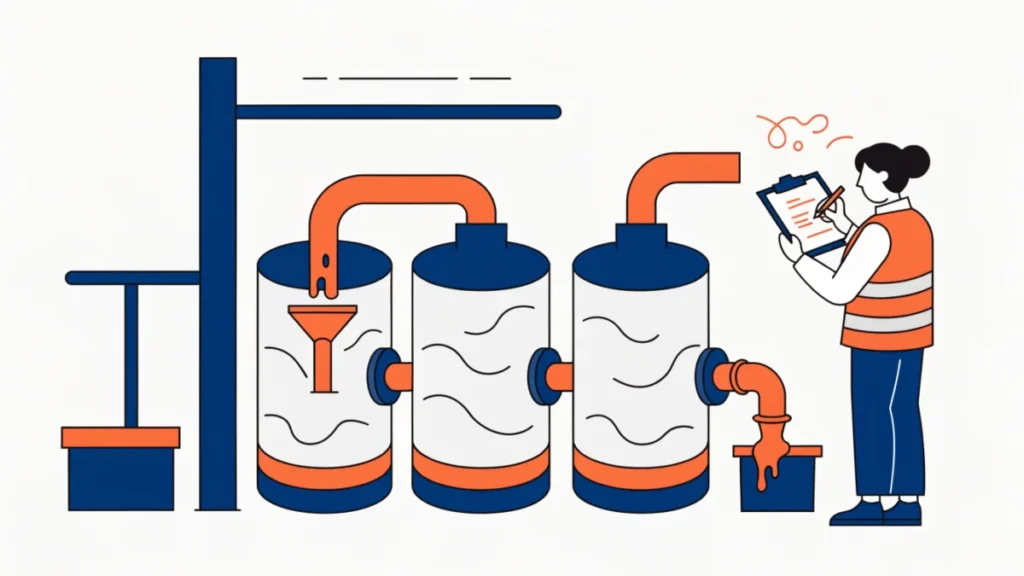
Process costing is used where materials pass through several processes, such as chemicals, dairy or oil refining. Each process is charged with its costs, normal loss is absorbed into the cost of good units, and any abnormal loss or abnormal gain is valued at normal cost and transferred to the costing profit and loss account.
Following are the problems and solutions of Process Costing in form of cost accounting.
Process Costing: Problems and Solutions
1. What do you mean by Process costing method?
It is a method of cost determination and is used in manufacturing concerns where raw material passes through many processes up to finished goods.
2. Explain the objective of the Process Costing method?
It is useful to determine the cost of the process, ascertain wastage in each process, ascertain the price of by-products and joint products, and segregate total expenses.
3. Define Joint Product?
Joint products are produced by the same type of raw material in the same process having nearly equal importance and value as of main product and require further processing.
4. What do you mean by Joint Cost?
Cost prior to the segregation point is known as joint cost as it is related to the main product, joint product & by-product.
5. What is Scrap?
It is incidental residue material from certain manufacturing operations. It is measurable but has a relatively minor recovery value than by-products.
6. What is Abnormal Wastage?
When actual wastage is more than normal wastage the difference is termed abnormal wastage.
7. What is represented by the excess of Actual wastage over Normal Wastage?
Excess of actual wastage over normal wastage is abnormal wastage.
8. What do you mean by abnormal gain (abnormal effective)?
When actual wastage is less than normal wastage the difference Is termed abnormal gain. The balance of this account is transferred to profit or loss.
9. What are the main products and by-products in the dairy industry and coke industries?
Industry: dairy industry, coke industry.
Main products: butter, cheese, coke.
By-products: skimmed milk, gas coal tar, benzol, ammonia.
10. What is the difference between a by-product and scrap?
A by-product is a secondary product of the same process with a reasonable sale value, such as skimmed milk in a dairy. Scrap is leftover material from production with only a small recovery value, such as metal shavings or offcuts.
11. What journal entries are passed for abnormal gain (abnormal effective)?
Abnormal gain arises when actual loss is less than normal loss. Three entries are passed:
(a) Process A/c Dr. To Abnormal Gain A/c, with the units saved valued at the normal cost per unit.
(b) Abnormal Gain A/c Dr. To Normal Loss A/c, with the scrap value of those units, because that scrap was expected but never arose.
(c) Abnormal Gain A/c Dr. To Costing Profit & Loss A/c, transferring the net balance at the end of the period.
12. What is the difference between abnormal loss and abnormal gain?
Abnormal loss is the excess of actual loss over normal loss; abnormal gain is the shortfall of actual loss below normal loss. Both are valued at the normal cost per unit. The net abnormal loss (after crediting its scrap value) is debited to the costing profit and loss account, while the net abnormal gain (after deducting the scrap value forgone) is credited to it.
Worked example: 1,000 units enter a process at a cost of ₹9,500. Normal loss is 5% (50 units) with scrap value ₹2 each. Actual output is 960 units, so 10 units are abnormal gain. Normal cost per unit = (9,500 − 100) ÷ 950 = ₹9.89. Abnormal gain = 10 × 9.89 = ₹98.90, less scrap forgone 10 × ₹2 = ₹20, so ₹78.90 is credited to costing P&L.
13. What is Interprocess Profit?
When the transfer of manufacturing goods from one process to another is being done after adding a certain percentage of profit. This creates a problem of interprocess profit main advantage is that the efficiency of every process is ascertained.
Valuation of finished stock and work in process will not be realistic as it includes interprocess profit and loss accounts that will not exhibit the correct amount of profit this problem can be eliminated if a reserve for unrealized profit is made.