

22 Categories in Classifications of Market in Economics (With Examples)
Markets sorted by area, time, competition, function, nature of goods and legality, with the categories under each and a real example for every one.
Free, plain-English guides on entrepreneurship, marketing, accounting, economics, finance and management, with Indian examples and current data.
Markets sorted by area, time, competition, function, nature of goods and legality, with the categories under each and a real example for every one.

Perfect competition, monopolistic competition, oligopoly, duopoly and monopoly, each with an example and a side-by-side comparison table.

A single seller, high barriers to entry, one firm forming the industry, price-making power and market control: the 12 traits of a monopoly market.

Few large sellers, interdependence, high entry barriers, sticky prices, heavy advertising and price leadership, shown with examples from Indian industry.

Differentiated products, many small firms, limited price power, non-price competition and fairly elastic demand: the traits of monopolistic competition.

Many buyers and sellers, identical goods, price-taking firms, free entry: the 10 characteristics, short run vs long run, and markets that come close.

BoT covers goods trade only, BoP records every payment with the world. How the two differ in concept, scope, components, purpose and role.
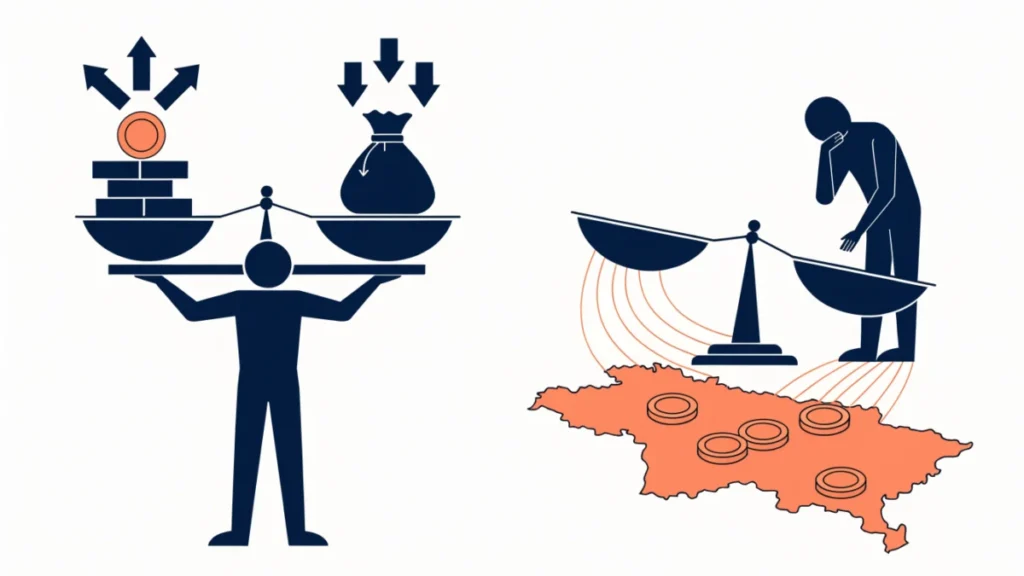
What it means for the balance of payments to be in equilibrium, when it slips into disequilibrium, and how to tell the two apart.

Cyclical, secular, structural, temporary, current account, capital account and more: the kinds of BoP imbalance and what causes each one.

Trade deficits, inflation, rapid development, an overvalued currency, business cycles and commodity shocks, with examples from India’s BoP history.