

Quick answer: Intrapreneurship is entrepreneurship practised by employees inside an existing company: they develop new products, processes or ventures using
Starting and running a business: ideas, theories, funding, challenges and the Indian startup ecosystem.
Quick answer: Intrapreneurship is entrepreneurship practised by employees inside an existing company: they develop new products, processes or ventures using

Quick answer: The non-economic environment of business includes the political, legal, social, cultural, demographic, technological, natural (ecological) and international environments.

Quick answer: Political factors that affect business include government policies and regulations, the ruling party’s economic ideology, political stability, defence

Quick answer: Since independence, India has encouraged entrepreneurship through progressive industrial policies, simpler licensing and liberalisation, development institutions and finance

Quick answer: The entrepreneurial class emerged in three broad stages: commercial entrepreneurship in the 18th century, when traders took on
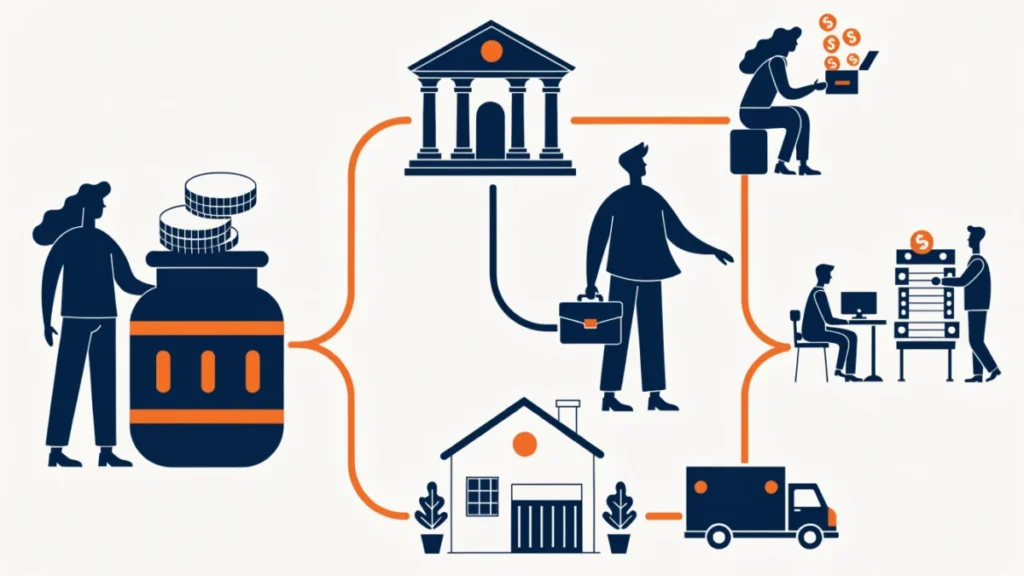
Quick answer: A new venture needs two kinds of capital. Fixed capital for land, buildings and machinery comes from the

Quick answer: Promotion is the first stage of starting a business: the entrepreneur turns an idea into a working enterprise.

Quick answer: Successful entrepreneurs combine personal traits, practical abilities and knowledge. Traits include hard work, alertness, creativity, courage, optimism, self-confidence,

Quick answer: The components of planning are objectives, strategies, policies, procedures, rules, methods, programmes, budgets, schedules and standards. Policies, procedures,

Quick answer: Organisational planning moves from goals to action in twelve steps: set objectives, collect information, establish planning premises, identify